A cover-up does not erase an old tattoo. It hides it inside a new design that is bigger, usually darker or more saturated in the right places, and cleverly arranged so the eye reads the new image instead of the old lines underneath. Understanding that single fact explains every piece of advice a cover-up artist will give you, starting with why the new tattoo almost always has to be larger than the one it covers.
Why bigger and darker is the rule
New ink is translucent in effect: the old pigment shows through unless the new design places enough dense color or black over it. Bold designs with strong shading, deep color, and texture, like florals, animals, and traditional motifs with heavy black, give an artist places to bury old lines. Pale, delicate, or mostly negative space designs cannot hide anything, which is why a small black script tattoo cannot be covered by a small pale watercolor, no matter how skilled the artist.
Placement of the new design's darkest elements is the craft. An experienced cover-up artist studies the old piece's lines and maps the new image so its shadows, outlines, and busy areas land exactly where the old ink is darkest.
When laser comes first
Some old tattoos are too dark, too dense, or in too awkward a position for the design you actually want. In those cases, a few laser sessions to lighten, not fully remove, the old ink can widen your options enormously. Fading first is common advice for large black pieces and for cover-ups where the dream design is lighter or more detailed than physics allows over the existing ink. An honest artist will tell you when that is your situation rather than selling you a cover-up doomed to show ghost lines within the year.
The consultation decides everything
Cover-ups are assessed in person, in good light, with the artist able to see the true colors and feel whether the old work is scarred or raised. Bring an open mind about subject matter: flexibility on the new design is the single biggest factor in how completely the old tattoo disappears. Expect the result to be judged after full healing, around six weeks, when any faint show through can be evaluated and touched up if needed.
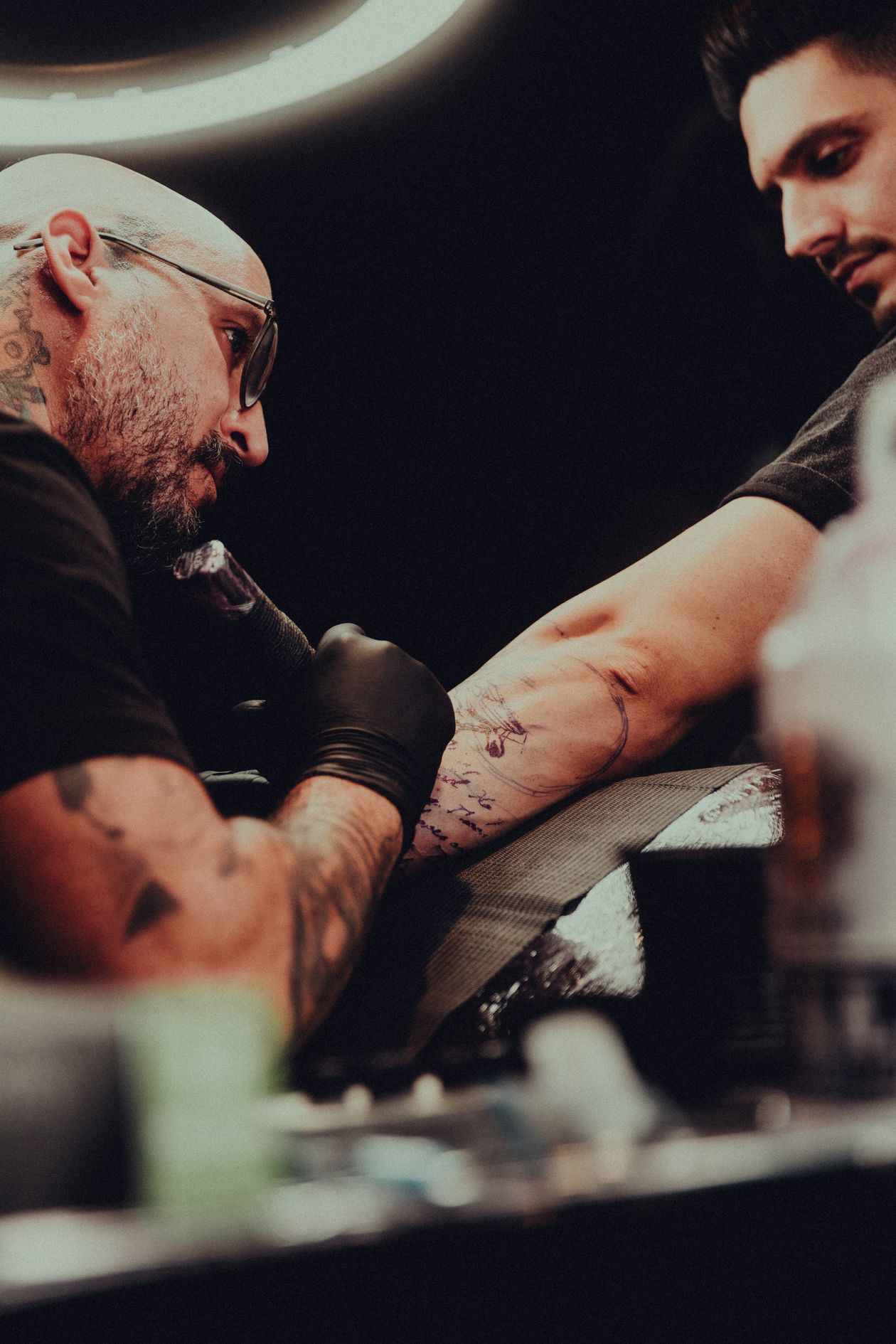
- In person assessment. The artist reads the old ink in good light and checks for scarring.
- Design to the constraint. New image mapped so dark, busy areas sit over old lines.
- Fade first if needed. Laser lightening when the old piece is too dark for the goal.
- Tattoo and heal fully. Judge show through at about six weeks, touch up if needed.
Scarred, raised, and lasered skin: special cases
Old tattoos that are raised or scarred, often from being worked too deeply originally, add a texture problem to the color problem. Ink can hide pigment, but it cannot flatten texture; under raking light, the old design's relief may remain visible even when its color is fully hidden. An artist can often use the new design's own shading and texture to camouflage that relief, but expectations should be set honestly at the consultation: invisible in normal light is a fair goal, undetectable under every light is not always.
Laser lightened skin also needs respect. Freshly lasered areas must fully recover before being tattooed, and heavily lasered skin can take ink slightly differently, sometimes needing an extra pass once healed. Tell your cover-up artist the full history of the area, laser sessions included, even if you think it does not matter. The artists who do this work well are part designer, part detective, and the case history you hand them is their best tool.
Budget honestly for the category. A cover-up is custom design work over a constraint, often larger than the piece you first imagined, and sometimes preceded by laser sessions. It will not be the cheapest tattoo of its size, and shopping it by price is how people end up needing a second cover-up. The economical cover-up is the one designed by an artist who does them regularly, done once, at the size the old ink required.
Common questions
Can any tattoo be covered?
Most can, but the new design must be larger and sufficiently dark or textured over the old ink. Very dark, dense pieces may need laser lightening first to give you the design you want.
Will the old tattoo show through over time?
A well planned cover-up should not, beyond a possible faint hint in the first healed months that a touch up can address. Poorly planned ones ghost through as the new ink settles, which is why artist selection matters here most.
Does a cover-up hurt more?
The sensation is similar to a normal tattoo, though working over scarred or heavily saturated old ink can feel more sensitive. Session length often matters more than the cover-up aspect itself.
Photos in this guide are representative stock images.
← All guides from Anythings Possible← Back to Anythings Possible